Player Migration Trends Between Servers During Content Droughts Revealing Retention Tactics in Persistent World Simulators
Written by Yves Berger · Jun 21, 2026
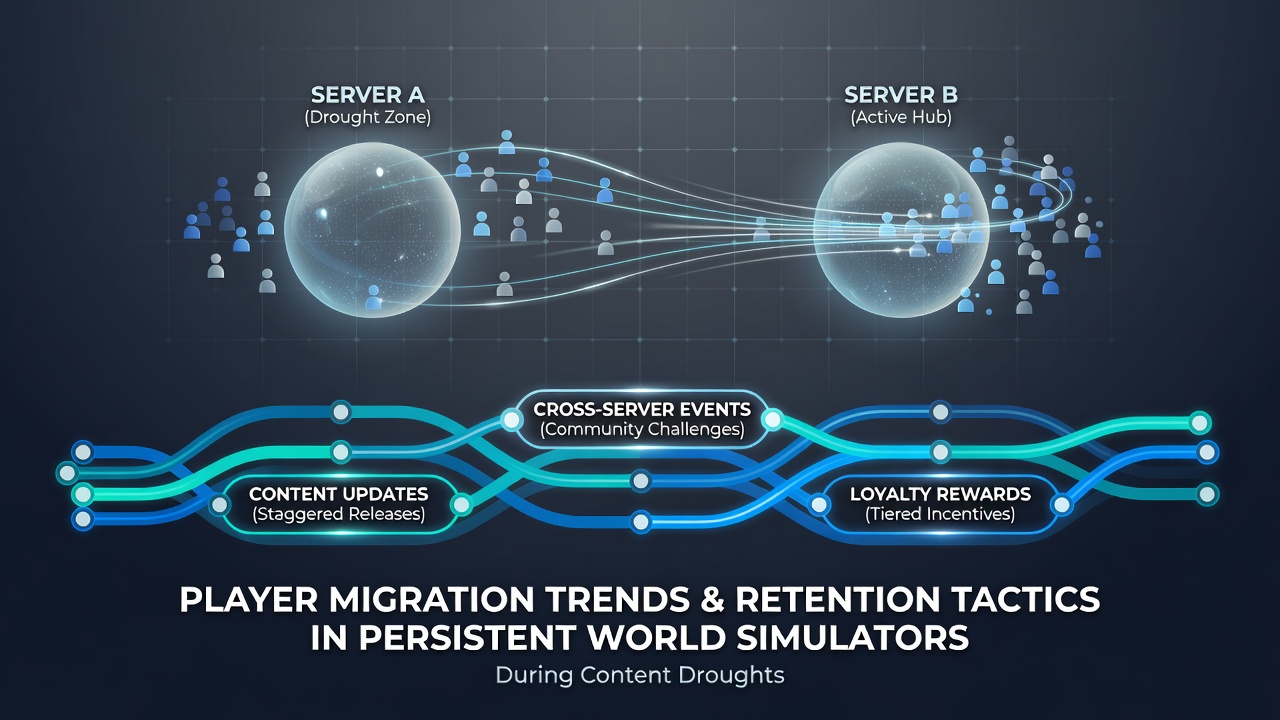
Player Migration Trends Between Servers During Content Droughts Revealing Retention Tactics in Persistent World Simulators
Player migration trends between servers during content droughts have drawn attention from analysts tracking persistent world simulators over the past several years, and data from multiple titles shows distinct patterns emerging when updates slow down. Research indicates that populations shift toward servers with stronger community structures or active events, while others experience noticeable declines. According to figures from industry monitoring groups, these movements often accelerate after three to four weeks without substantial new content releases, creating measurable changes in login rates and economy activity across regions.
Tracking Population Shifts in Established Titles
Observers note that games relying on ongoing progression systems see the clearest evidence of these trends, since players seek out environments where social groups remain intact and resources stay accessible. Studies from academic research teams at institutions in Australia and Canada have documented how migration spikes correlate with announcement gaps, and one analysis covering data through June 2026 revealed that certain servers lost up to 18 percent of their concurrent users within a single month when major patches were delayed. Those same datasets showed incoming transfers concentrated on realms already hosting organized guilds or scheduled community events, suggesting retention tactics tied to social infrastructure rather than new mechanics alone.
What's interesting here is the way server economies respond to these flows, because resource node activity and auction house volume drop sharply on departing servers while rising on destination ones. Industry reports compiled by the Entertainment Software Association highlight similar patterns across North American and European titles, where login streak mechanics and daily reward systems appear to slow but not fully prevent departures once content pauses extend beyond typical cycles.
Retention Mechanisms Under Scrutiny
Developers have experimented with various approaches to stabilize populations during these periods, and evidence suggests some tactics produce more consistent results than others. Server merges represent one direct intervention, yet they often coincide with temporary spikes in activity followed by renewed outflows if underlying content issues remain unaddressed. Cross-referencing player movement logs with event calendars shows that limited-time community challenges or rotating world bosses can redirect attention toward specific servers, effectively concentrating remaining players rather than retaining them evenly across the network.
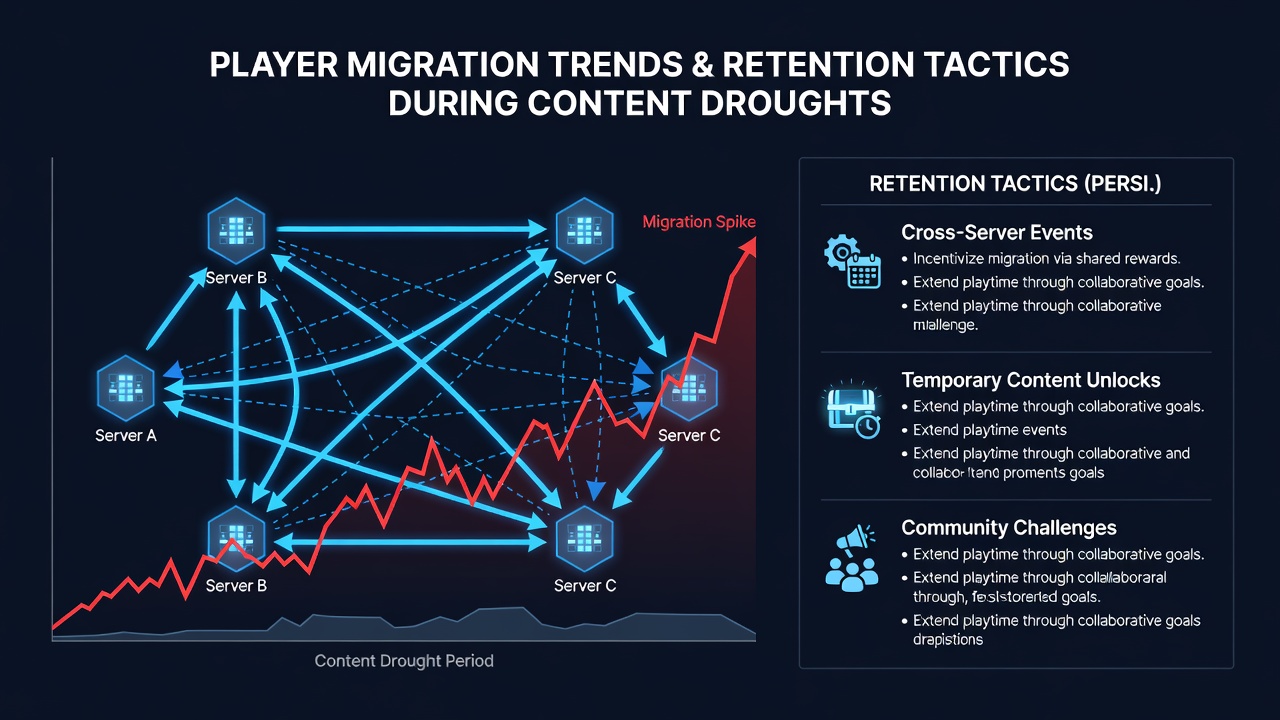
Another observed approach involves adjusting progression catch-up systems to allow new or returning players quicker integration into established groups, and university-led examinations of European titles found that these adjustments correlated with reduced migration rates when implemented early in a drought cycle. Data shows login reward structures that scale with consecutive days also influence short-term behavior, although long-term server loyalty appears more closely linked to the presence of active social hubs than to individual incentives alone.
Regional Variations and Data Patterns
Patterns differ by geographic player base as well, since Asian markets demonstrate tighter clustering around servers with strong competitive leaderboards during quiet periods, whereas Western populations tend to prioritize social or roleplay-focused environments. Reports compiled through collaborative efforts between regulatory bodies in Singapore and research organizations in the EU indicate that migration velocity increases when drought periods overlap with real-world events such as school holidays or seasonal work cycles. These overlaps create predictable windows where players test alternative servers before committing to transfers, and aggregated telemetry reveals higher experimentation rates among accounts with extended play histories.
Yet the underlying driver remains consistent across datasets: players migrate toward conditions that sustain engagement momentum when official content pipelines slow. Retention tactics that address social connectivity and resource accessibility demonstrate clearer correlations with stabilized populations than those focused solely on cosmetic or progression bonuses.
Conclusion
Overall, the record from persistent world simulators through mid-2026 illustrates how content droughts function as stress tests for retention design, exposing which server features maintain player presence when external updates pause. Continued monitoring of migration metrics provides developers with concrete indicators for refining server management strategies and event timing, allowing more targeted interventions before population imbalances become entrenched across the network.