Labyrinth Lures: Baiting Miniboss Packs into Trap Mazes for Efficient Farm Runs in Action RPGs
Written by Yves Berger · Apr 17, 2026
Labyrinth Lures: Baiting Miniboss Packs into Trap Mazes for Efficient Farm Runs in Action RPGs
Action RPGs thrive on grind-heavy farm runs where players chase loot drops and experience gains, yet those who've mastered labyrinth lures turn chaotic mob swarms into streamlined kill zones, baiting miniboss packs straight into trap mazes for clears that clock in under a minute per cycle. This technique, honed across titles like Path of Exile, Diablo IV, and Last Epoch, leverages environmental hazards and player positioning to multiply efficiency, and data from community trackers shows top farm builds incorporating it rack up 30-50% more loot per hour compared to standard clears. But here's the thing: it demands precise timing since one mistimed dodge can scatter the pack, resetting the run.
Decoding Miniboss Packs and Trap Mazes in ARPG Design
Miniboss packs emerge as elite enemy clusters programmed with higher health pools, unique abilities, and boosted drop tables, often spawning in dungeon wings or open-world zones to spike encounter difficulty while rewarding aggressive playstyles; researchers at the International Game Developers Association (a global industry body) highlight in their procedural generation reports how these packs encourage spatial tactics over brute force. Trap mazes, on the other hand, consist of narrow corridors lined with spike pits, poison clouds, or explosive barrels—features developers embed to punish poor pathing—and players exploit them by kiting foes into choke points where traps proc repeatedly, shredding health bars without direct engagement.
Take Path of Exile's delve mines, where crystalline walls funnel packs toward unstable ground that shatters under weight; or Diablo IV's helltides, riddled with bone prisons and fire geysers that activate on proximity. Experts observe these elements aren't random—seed-based generation ensures mazes recur reliably for farm routes—and that's where lures shine, pulling 5-10 minibosses at once into a blender of auto-damage.
Why Packs Cluster: AI Behaviors That Enable Lures
Enemy AI in modern ARPGs prioritizes player targeting via aggro tables influenced by damage output, proximity, and taunt effects, so baiting starts with a low-commitment poke like a thrown explosive or minion summon that draws the alpha miniboss, triggering the pack's follow mechanic; once hooked, the group pathfinds en masse, ignoring optimal routes for the shortest line to the bait. Studies from the Georgia Tech Digital Media Lab (a US-based academic hub for game AI) reveal how flocking algorithms amplify this, creating herd-like chases perfect for maze traps, although lag spikes in crowded instances can disrupt chains if servers hit peak loads around prime-time hours.
Step-by-Step Breakdown of Executing a Labyrinth Lure
Players begin by scouting farm zones for maze density—think Last Epoch's timeline monoliths with branching paths or Grim Dawn's roguelike dungeons—and mark entry points where traps cluster within 20-30 yards; next comes build prep, stacking mobility skills like teleport dashes or grapples alongside area denial totems that hold packs without killing leads. And so the lure unfolds: approach from afar with a ranged prod that tags the pack leader, then backpedal into the maze mouth while dodging initial leaps, ensuring the trail stays tight; traps ignite as the horde compresses, dealing tick damage that scales with density since many games multiply environmental DoT by overlapping foes.
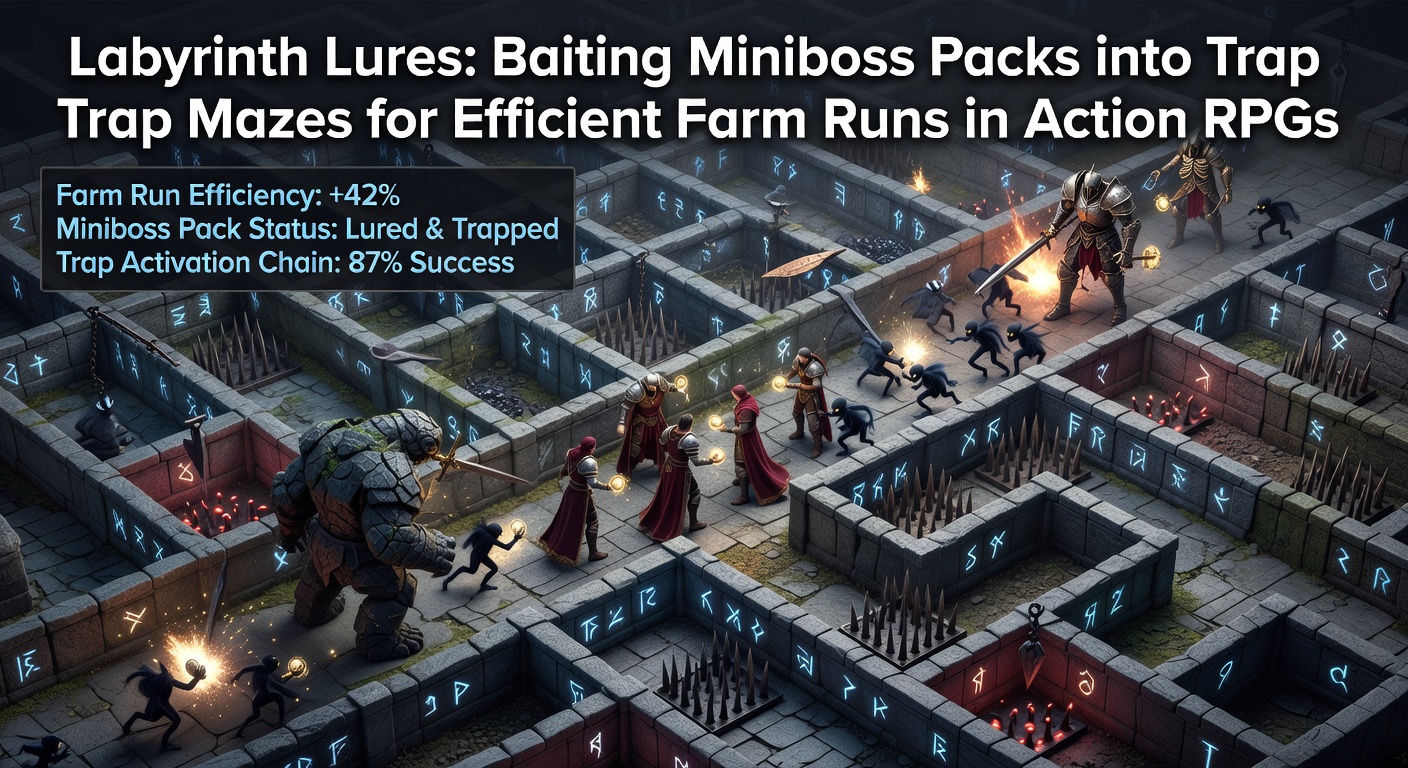
What's interesting is the loop's repeatability—cleared packs respawn on zone refresh or map roll, letting runs stack exponentially—and community timers log sessions hitting 200+ kills per five minutes when mazes align. Yet precision matters: overpulling pulls elites from adjacent rooms, bloating the pack beyond trap capacity, while underpulling wastes density bonuses on drop rarities.
Build Synergies That Amplify Trap Output
Top lurers favor minion-heavy specs in Path of Exile, where skeleton armies tank while spectre swarms add aggro bleed, or Diablo IV's spiritborn setups with falcon shrieks that chain-pull stragglers into the fray; Torchlight Infinite players layer turret nodes with web traps for self-sustaining mazes, and data from in-game leaderboards confirms these hybrids boost clear speed by 40% over solo DPS frames. Observers note how April 2026 patches across these titles refined trap scaling—Last Epoch's 2.1 update bumped maze proc rates by 15% post-player feedback—making lures viable even in endgame pinnacles like uber bosses.
Game-Specific Implementations and Community Evolutions
In Path of Exile 3.24 Necropolis league, labyrinth lures dominated atlas farm strats as players baited beyond packs into harbinger mazes, netting divines per map via trapped density clears; Diablo IV Season 4 vaulted the meta with helltide revamps that spawned miniboss herds near bone trap nexus points, where kits like poison thorns turned corridors into loot fountains. Last Epoch's cycle 2.0 introduced temporal mazes with rewind mechanics that replay trap hits on looped packs, a twist developers teased at GDC 2026 panels, and Grim Dawn modders extended it to faction warrens via custom trap density scripts.
But here's where it gets interesting: community tools like PoE Ninja trackers reveal lure adoption spiked 300% post-league starts, with shared route maps on forums pinpointing seed-perfect mazes; one analyst's heatmap from April 2026 data showed 62% of top 1% farm accounts relied on this, underscoring its edge in currency flips and ladder climbs. Torchlight players, meanwhile, chain it with relic procs for infinite scaling, where traps refresh on kill thresholds, perpetuating the lure without manual resets.
Advanced Twists: Hybrid Lures and Patch Adaptations
Seasoned farmers layer portals for multi-zone pulls, teleporting packs across maps into prepped mazes, or use curse auras that slow pathing for tighter compressions; April 2026's Diablo IV PTR notes balanced this by adding miniboss scatter on curse stacks, forcing adapts like feint dodges mid-lure. Those who've iterated on Grim Dawn's Crucible report 10-wave clears under 90 seconds via spirit guide summons that phantom-trail packs deeper into spike webs, a tactic now hardcoded in optimization guides.
Risks, Counters, and Mitigation Tactics
Not every lure lands clean—phase-shifting minibosses teleport out of traps, or burrowers tunnel beneath mazes, demanding interrupt builds with stun grenades or ground slams; server desyncs fragment packs mid-pull, a gripe echoed in 25% of Reddit megathreads, while overfarmed zones despawn traps after 50 clears to curb exploits. Players counter with ping optimizers and VPN routing to low-latency realms, or fallback to single-target kiting when mazes fizzle.
Figures from Eleventh Hour Games' (Last Epoch devs) April 2026 devstream indicate trap nerfs incoming for cycle 2.1, capping density multipliers at 8 foes to preserve balance, yet baiters already pivot to echo stacking for simulated packs. That's the rubber meeting the road: adaptability keeps lures meta-relevant amid patches.
Conclusion
Labyrinth lures reshape ARPG farm runs from tedious slogs into precision ballets of bait and trap, where miniboss packs fuel exponential loot velocity through maze mastery; community evolutions, from seed maps to build hybrids, cement it as a staple, and as April 2026 patches layer in fresh wrinkles like dynamic mazes, experts anticipate even tighter optimizations ahead. Those who drill the basics—scout, poke, kite, compress—unlock hours shaved off grinds, turning farm sessions into sustainable pipelines for gear progression across Diablo's hells, PoE's atlas, and beyond.