Integrating Social Media Sentiment Tracking with Update Rollout Schedules to Forecast Player Retention Shifts in Ongoing Service-Based Titles
Written by Viktor Günther · Aug 4, 2026
Integrating Social Media Sentiment Tracking with Update Rollout Schedules to Forecast Player Retention Shifts in Ongoing Service-Based Titles
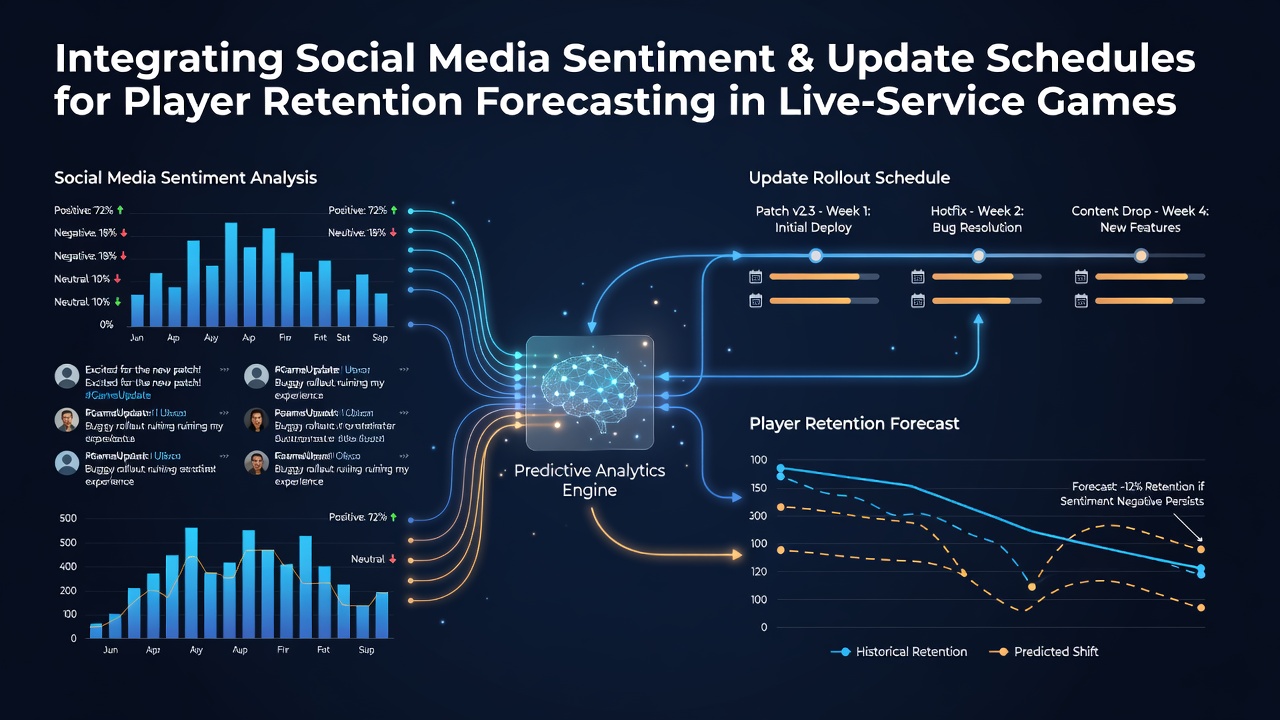
Service-based video games maintain active player bases through regular content updates, and teams now combine social media sentiment data with rollout calendars to anticipate changes in retention rates. Researchers track mentions across platforms like X, Reddit, and Discord, then align those signals with scheduled patches, expansions, and balance adjustments. Data indicates that negative sentiment spikes often precede measurable drops in daily active users within two to four weeks after an update launches.
Core Components of Sentiment Tracking Systems
Analysts collect posts that reference specific patch notes, new characters, or gameplay mechanics, then apply natural language processing models to score polarity and volume. These scores feed into dashboards that overlay sentiment trends against historical retention curves from the same title or similar games. Observers note that positive spikes around community-requested features tend to correlate with sustained login streaks, whereas frustration around bugs or monetization shifts shows stronger links to churn.
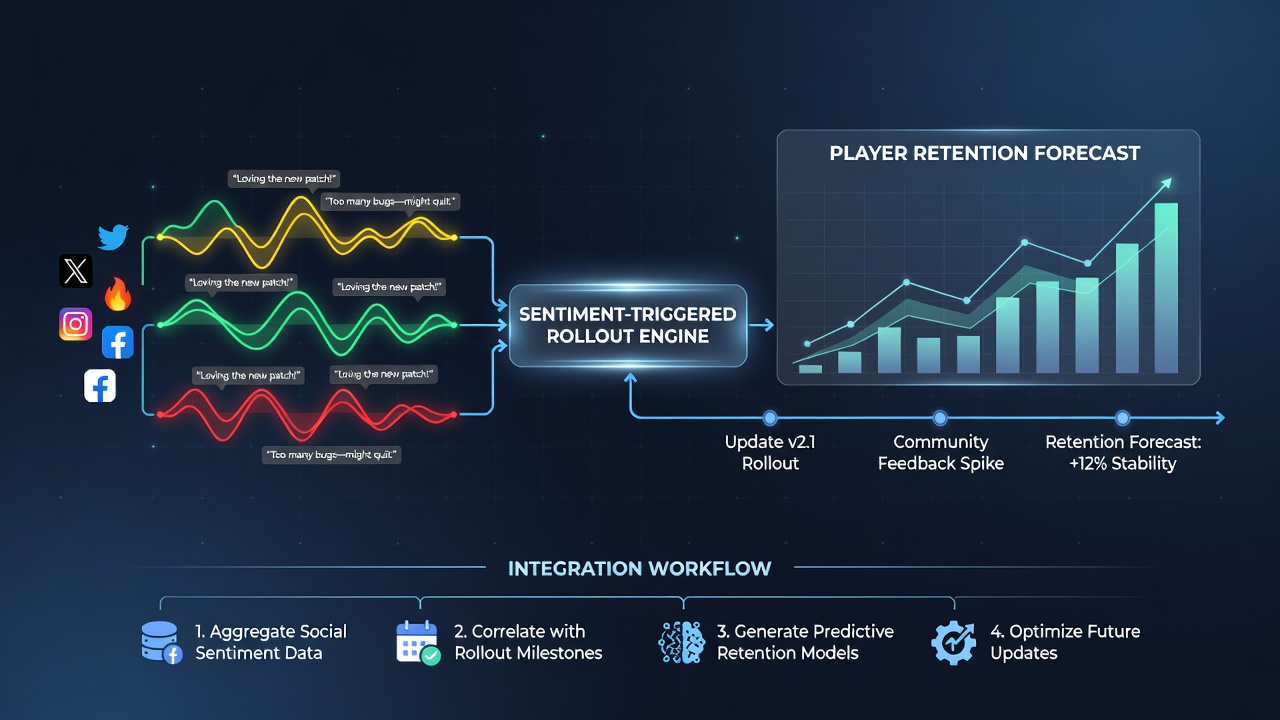
Teams integrate these datasets by timestamping each social media cluster to the exact hour an update deploys. This alignment reveals lag times between announcement, release, and measurable player behavior changes. Studies from the Entertainment Software Association have documented how early sentiment monitoring helped several studios adjust hotfix priorities before retention metrics declined further.
Aligning Rollout Schedules with Predictive Models
Update calendars in live service titles follow fixed cycles, yet player response remains variable. Forecasters build regression models that treat sentiment scores as leading indicators and retention percentages as dependent variables. When models flag a high-risk window, studios may accelerate quality-assurance passes or delay controversial balance changes. In August 2026, several major titles adjusted mid-season events after sentiment tracking flagged growing dissatisfaction with reward pacing two weeks before the scheduled drop.
Coordinated systems also incorporate external factors such as competing game launches and platform-wide promotions. Analysts cross-reference these events with internal sentiment streams to isolate update-specific effects. The approach reduces noise and improves forecast accuracy, according to reports from the Interactive Software Federation of Europe.
Case Examples from Established Titles
One persistent-world shooter adjusted its seasonal reward structure after sentiment analysis showed repeated complaints about grind length. The studio inserted an additional mid-season event and observed that retention curves stabilized rather than following the predicted downward slope. Another multiplayer action title used similar tracking to time a server stability hotfix immediately after a large content drop, limiting the duration of negative mentions and preserving weekly active user counts.
Academic researchers at the University of Alberta published findings showing that titles employing combined sentiment and schedule models achieved 12 to 18 percent higher average retention across six-month observation periods compared with titles relying solely on internal telemetry. These results emerged from anonymized datasets supplied by multiple publishers operating ongoing service games.
Implementation Considerations and Data Sources
Successful integration requires clean data pipelines that handle platform-specific API limits and language variations. Teams often maintain separate scoring models for short-form versus long-form discussions to avoid underweighting detailed feedback. Privacy regulations in multiple regions further shape how raw social data can be stored and processed, prompting many studios to rely on aggregated trend summaries rather than individual post archives.
External benchmarks come from industry reports and regulatory filings. Canadian data from Innovation, Science and Economic Development Canada has highlighted the growing use of third-party analytics tools among mid-sized developers. Australian Competition and Consumer Commission publications have noted similar adoption patterns in the regional market, emphasizing transparency around data collection practices.
Conclusion
Integration of social media sentiment tracking with update rollout schedules supplies studios with actionable lead time for managing retention in service-based titles. The method relies on timestamp alignment, statistical modeling, and external benchmarks rather than isolated internal metrics. As more publishers adopt these combined systems, retention forecasting continues to evolve from reactive monitoring toward proactive schedule adjustments.