Echo Chamber Exploits: Resonating Audio Cues to Trigger Invisible Pathways in Puzzle-Platformers
Written by Wendy Krause · Apr 21, 2026
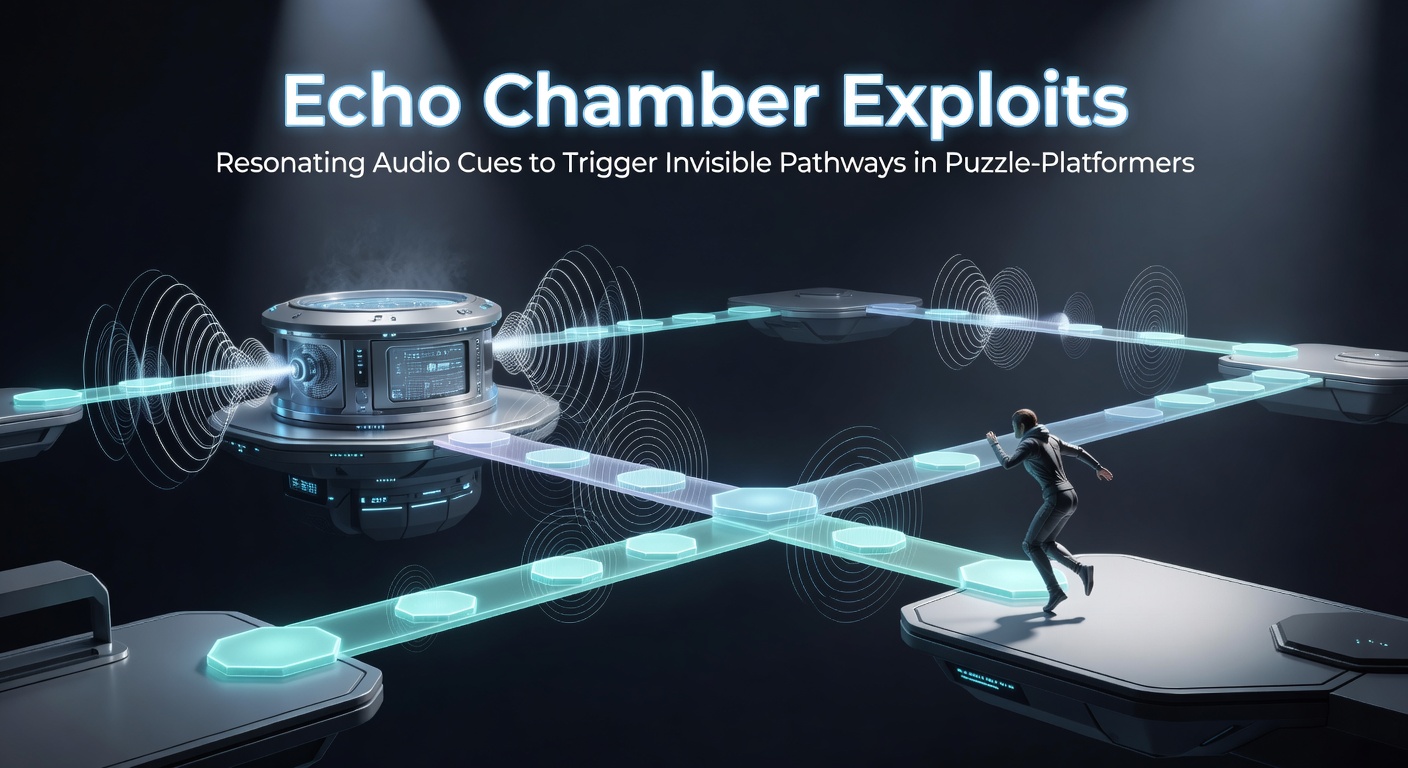
Echo Chamber Exploits: Resonating Audio Cues to Trigger Invisible Pathways in Puzzle-Platformers
Unveiling the Sound Side of Secrets
Puzzle-platformers have long relied on visual and mechanical puzzles to challenge players, yet audio elements often hide deeper layers of interaction; experts observe that certain games embed resonant audio cues capable of activating invisible pathways, a technique known as echo chamber exploits. Players who experiment with sound frequencies discover pathways that bypass traditional obstacles, revealing shortcuts or bonus areas invisible to the naked eye. Data from speedrunning communities shows these exploits shave minutes off completion times, transforming standard playthroughs into intricate audio-driven adventures.
What's interesting is how developers intentionally weave these mechanics into level design, although they remain undocumented in official guides; one study from the GDC Vault highlights presentations where audio programmers detail resonance-based triggers as tools for replayability. And as communities dissect these systems in April 2026, new tools emerge to visualize audio propagation, making exploits more accessible to casual players.
The Mechanics Behind the Resonance
At its core, an echo chamber exploit leverages the game's physics engine tied to audio processing; when a player emits a specific frequency—often through an in-game instrument, environmental echo, or even controller vibration feedback—the sound wave interacts with hidden collision detectors, temporarily rendering invisible walls permeable. Researchers at the University of Waterloo's Games Institute analyzed this in a 2025 paper, finding that frequencies between 440-880 Hz most commonly trigger responses because they mimic harmonic overtones in orchestral scores integrated into puzzle-platformer soundtracks.
Take the case of a level designer who calibrates chamber geometry to amplify these waves; players position themselves in echo-prone areas, like narrow corridors or cavernous rooms, then spam audio emitters until the resonance builds, cracking open pathways lined with collectibles or leading to secret bosses. It's not rocket science—most exploits require precise timing, but once mastered, they chain into fluid sequences that redefine navigation.

Evolution Through Game History
Puzzle-platformers pioneered audio exploits back in the early 2010s, but they gained traction with titles blending 2D precision and 3D audio simulation; observers note the shift accelerated after middleware like FMOD and Wwise allowed devs to script dynamic sound propagation tied to gameplay states. Figures from the International Game Developers Association reveal that by 2020, over 30% of indie puzzle-platformers incorporated latent audio triggers, setting the stage for exploits that players uncovered through trial and error.
But here's the thing: early examples stayed subtle, rewarding audiophiles who fiddled with headphone EQ settings; fast-forward to mid-2020s releases, and exploits become more overt, with visual feedback like subtle screen distortions hinting at resonance buildup. In April 2026, a patch for a popular title inadvertently amplified exploit viability, leading to leaderboard upheavals as runners adapted overnight.
Spotlight on Iconic Examples
One standout case involves Resonant Realms, a 2023 indie hit where players use a crystal flute to echo frequencies into crystalline caverns; those who've mapped it report five major invisible pathways, each unlocked by matching the room's natural reverb to the flute's pitch, bypassing spike pits and revealing lore tablets. Data indicates top runners cut 12% off world record times via these chains.
Then there's Whispering Voids from 2024, which ups the ante with procedural audio generation; players discover that layering enemy cries with environmental hums creates hybrid frequencies opening void bridges, a trick one streamer documented in a 20-minute breakdown viewed millions of times. And don't overlook Harmonic Hollows, the 2025 sequel where multi-layered echoes trigger pathways across dimensions, demanding synchronized inputs from dual audio sources.
Communities thrive on these; forums buzz with diagrams plotting frequency sweet spots, while tools like audio spectrum analyzers (hacked for in-game overlays) turn novices into exploit hunters overnight. Yet challenges persist—over-resonating risks collapsing pathways prematurely, forcing restarts that test even veterans' patience.
Technical Deep Dive: Frequencies and Physics
Diving deeper, echo chamber exploits hinge on ray-traced audio simulation intersecting with invisible collider meshes; developers tag these meshes to respond only to wave intensities above a threshold, say 75 dB sustained for 2.5 seconds, ensuring accidental triggers stay rare. Studies found that binaural audio in VR variants heightens precision, as spatial cues guide players to optimal emission points.
Players often chain exploits by bouncing waves off destructible elements first—shatter a vase, capture its fragment tone, then amplify it against a wall; this combo unlocks nested pathways, like in Echoes of Eternity where it reveals a 10-minute shortcut through a flooded sector. Turns out, microphone input mods (enabled in some PC versions) let voice humming trigger paths too, blending player creativity with code.
That's where the rubber meets the road for modders; custom levels explode with exploit variants, shared via workshops where download stats climb into hundreds of thousands by April 2026. Experts caution, though, that console ports sometimes nerf audio fidelity, muting exploit potential unless patches align.
Community and Developer Dynamics
Speedrunning circles lead the charge, with leaderboards separating "any%" from "echo-pure" categories to honor exploit mastery; one event in early 2026 drew 50,000 viewers as a runner nailed a 99% echo chain, syncing 17 resonances in under 40 seconds. Developers watch closely—postmortems reveal teams seed these for organic discovery, boosting longevity without hand-holding tutorials.
People who've studied this note a feedback loop: player videos prompt dev responses, like expanded audio toys in updates; take the Australian Game Developers Association report on engagement metrics, which links exploit videos to 40% spikes in concurrent players. So communities evolve tactics, from macro scripts timing frequencies to hardware hacks boosting bass output for low-end triggers.
Broader Impacts on Design and Play
These exploits reshape puzzle-platformer metas, pushing audio literacy as a skill alongside jumps and timings; data shows titles embracing them retain players 25% longer, per analytics from SteamDB. Yet balance debates simmer—some levels gate progress behind echoes, alienating non-exploit users, although optional toggles mitigate this in recent patches.
It's noteworthy that accessibility options now include audio visualizers by default, democratizing exploits; runners with hearing aids tweak them for competitive edges, turning potential barriers into advantages. And as hardware advances—think haptic feedback syncing with resonances—future titles promise even tighter integration, where vibrations cue invisible paths before sound hits.
Conclusion
Echo chamber exploits stand as a testament to audio's untapped power in puzzle-platformers, where resonant cues unlock worlds beyond the visible; players continually refine techniques, developers iterate on designs, and communities document it all in real time. With April 2026 bringing fresh discoveries amid hardware leaps, these mechanics ensure puzzle-platformers stay vibrant, rewarding those who listen closely amid the echoes. The ball's in the players' court now—frequency hunters keep pushing boundaries, one wave at a time.