Decoding Server Tick Rate Variances Against Input Latency Logs to Stabilize Hit Registration in Competitive Shooters
Written by Wendy Krause · Jul 21, 2026
Decoding Server Tick Rate Variances Against Input Latency Logs to Stabilize Hit Registration in Competitive Shooters
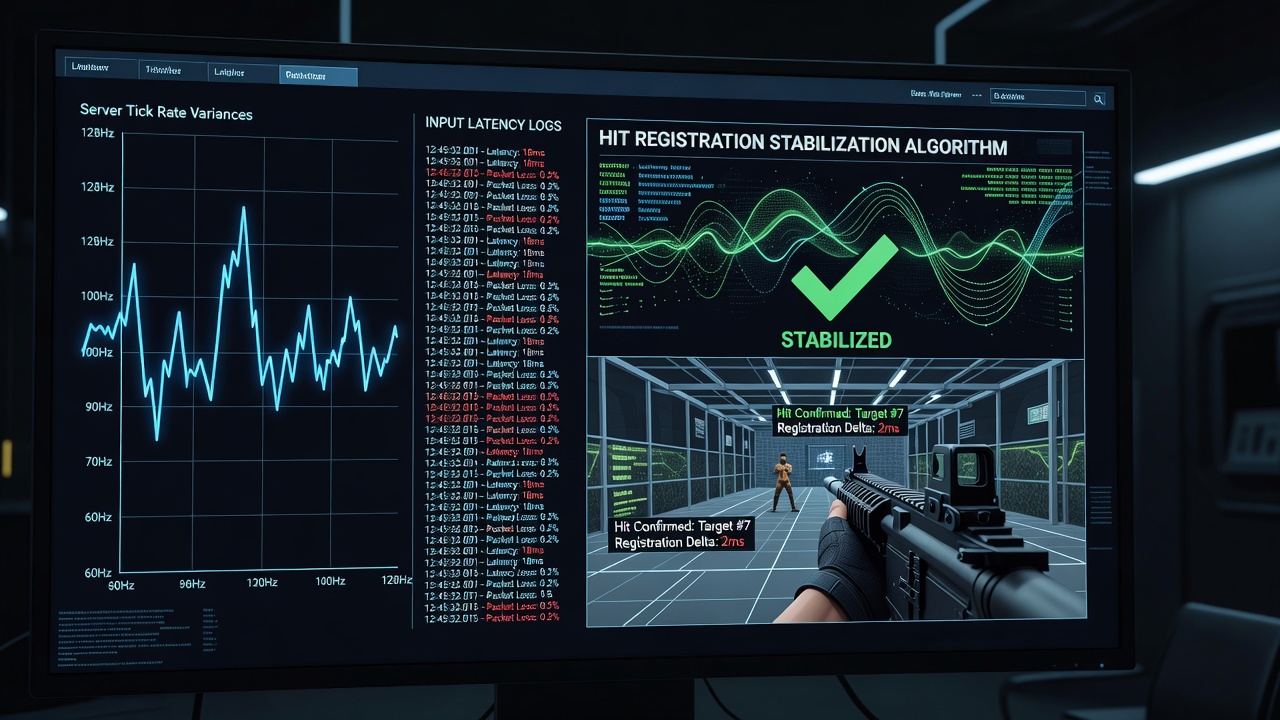
Competitive shooters rely on precise timing between client inputs and server validation, yet variances in server tick rates create inconsistencies when matched against input latency logs. Data from multiple esports events shows that tick rates operating between 60 and 128 Hz produce measurable differences in hit registration outcomes, particularly when client-to-server latency exceeds 30 milliseconds. Observers note that developers adjust these parameters through detailed log analysis rather than fixed settings alone. Server tick rate defines how frequently the authoritative game state updates on the host machine. Higher rates allow more frequent position checks and damage calculations, which reduces the window during which a projectile or hitscan trace might miss its intended target due to movement prediction errors. When tick rates fluctuate because of hardware load or network congestion, the resulting gaps appear in latency logs as spikes that misalign incoming packets with the server's simulation cycle. Research from the University of Waterloo indicates these misalignments account for a significant portion of reported hit registration complaints in titles using client-side prediction models. Input latency logs capture the delay between player actions and their arrival at the server, including both network transmission time and local processing overhead. Analysts compare these logs against tick intervals to identify patterns where high variance coincides with registration failures. For instance, a packet arriving just after a tick boundary may require the server to interpolate the player's position across two simulation steps, introducing small positional offsets that affect whether a shot registers as a hit. Those who study these interactions find that logging tools capable of timestamping at microsecond resolution help isolate the exact points where variance exceeds acceptable thresholds.Analyzing Tick Rate Fluctuations in Live Environments
Live tournament data collected during July 2026 events revealed that servers running at nominal 128 Hz sometimes dipped to 90 Hz under peak player loads, creating measurable registration instability. Teams monitoring these drops cross-referenced the fluctuations with client latency logs to determine which matches experienced the highest rates of disputed hits. The process involves exporting tick timing data alongside per-packet latency figures, then applying statistical filters to flag intervals where the combined variance exceeded 8 milliseconds.
Engineers use this combined dataset to recalibrate interpolation windows on the client side, ensuring predicted positions remain closer to the server's authoritative state even during brief tick drops. Studies conducted at the Technical University of Denmark demonstrate that such recalibrations reduce the incidence of false negatives in hit detection by aligning client render frames more tightly with server simulation cycles. Because competitive shooters often run at 240 Hz or higher on player machines, the mismatch between client frame rate and server tick rate amplifies any latency variance present in the logs.
Methods for Stabilizing Registration Through Log Correlation
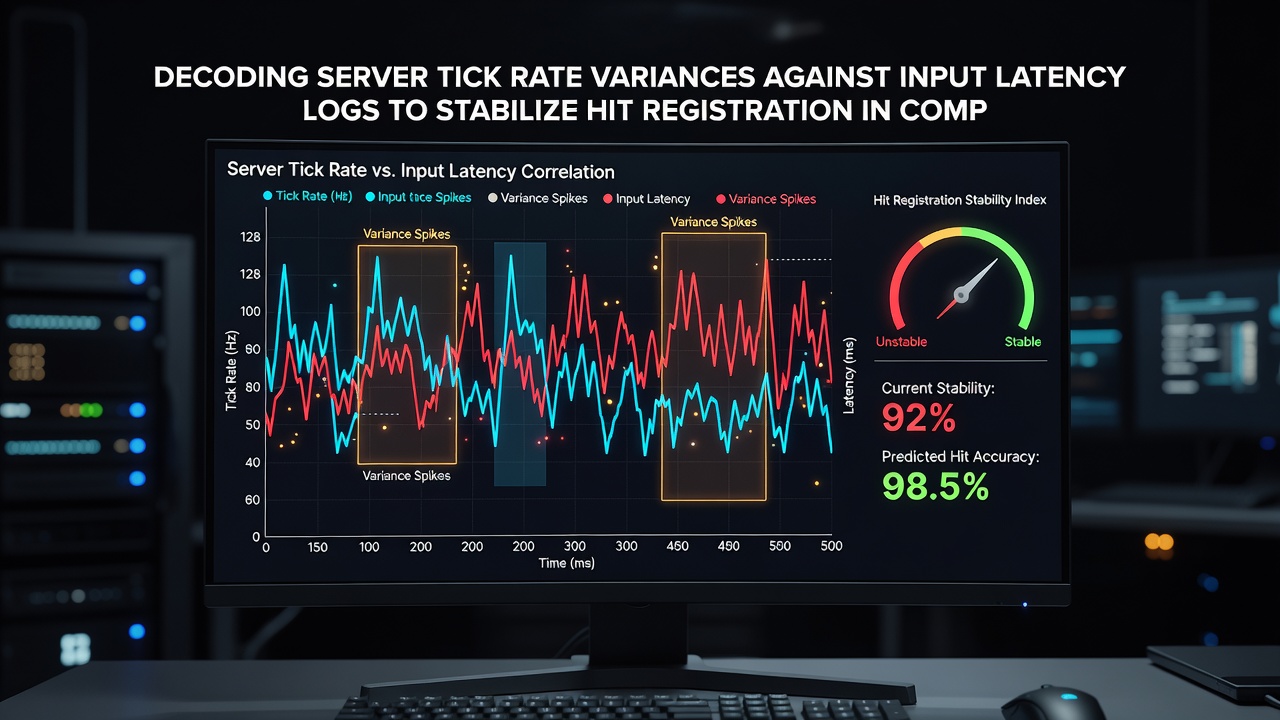
Stabilization begins with establishing baseline tick rate behavior under controlled conditions, then measuring deviations during actual matches. Developers create scripts that parse latency logs for timestamps where input packets arrive outside expected tick windows, allowing them to apply compensatory adjustments such as dynamic tick rate scaling or enhanced lag compensation buffers. One approach involves increasing the server's authoritative tick rate during low-load periods while simultaneously tightening the maximum acceptable latency threshold reported to clients.
Another technique uses machine learning models trained on historical log pairs to predict when variance is likely to cause registration issues. These models receive inputs including current tick interval, average latency, and packet jitter, then output recommended buffer sizes for hit validation. Research published by the IEEE Computer Society shows this predictive method improved registration consistency across multiple titles when tested against both LAN and internet-based matches. Because the models update continuously from live data, they adapt to regional network conditions without requiring manual intervention for each tournament region.
Implementation Considerations Across Different Game Engines
Engine-specific architectures influence how tick rate and latency data integrate during hit registration. Source-based engines expose tick timing through console variables that can be logged directly, whereas Unreal Engine titles often require custom plugins to capture equivalent metrics at the same granularity. Teams working across both platforms report that normalizing the log formats before correlation analysis produces more reliable results when comparing stabilization outcomes. In July 2026 several major tournaments adopted unified logging standards developed by the International Game Developers Association to facilitate cross-title analysis of registration stability.
Buffer adjustments must remain within competitive fairness guidelines, so changes derived from log analysis receive review from both developers and tournament organizers. Data from the Australian Digital Games Research Association indicates that transparent publication of these adjustments correlates with higher player confidence in hit registration systems. When variance thresholds trigger automatic compensation, the system records the event alongside the original latency values, creating an audit trail that can be examined after matches conclude.
Conclusion
Effective stabilization of hit registration emerges from systematic comparison of server tick rate behavior against detailed input latency logs. The techniques outlined above allow developers to identify and mitigate variance sources before they impact competitive integrity. Continued refinement of these methods, supported by ongoing data collection from events worldwide, provides the foundation for more consistent gameplay experiences across different network conditions and hardware configurations.