Cross-Referencing Achievement Metadata with Playtime Statistics for Identifying Optimal Grinding Locations in Expansive Fantasy Worlds
Written by Morgan Albrecht · Jun 9, 2026
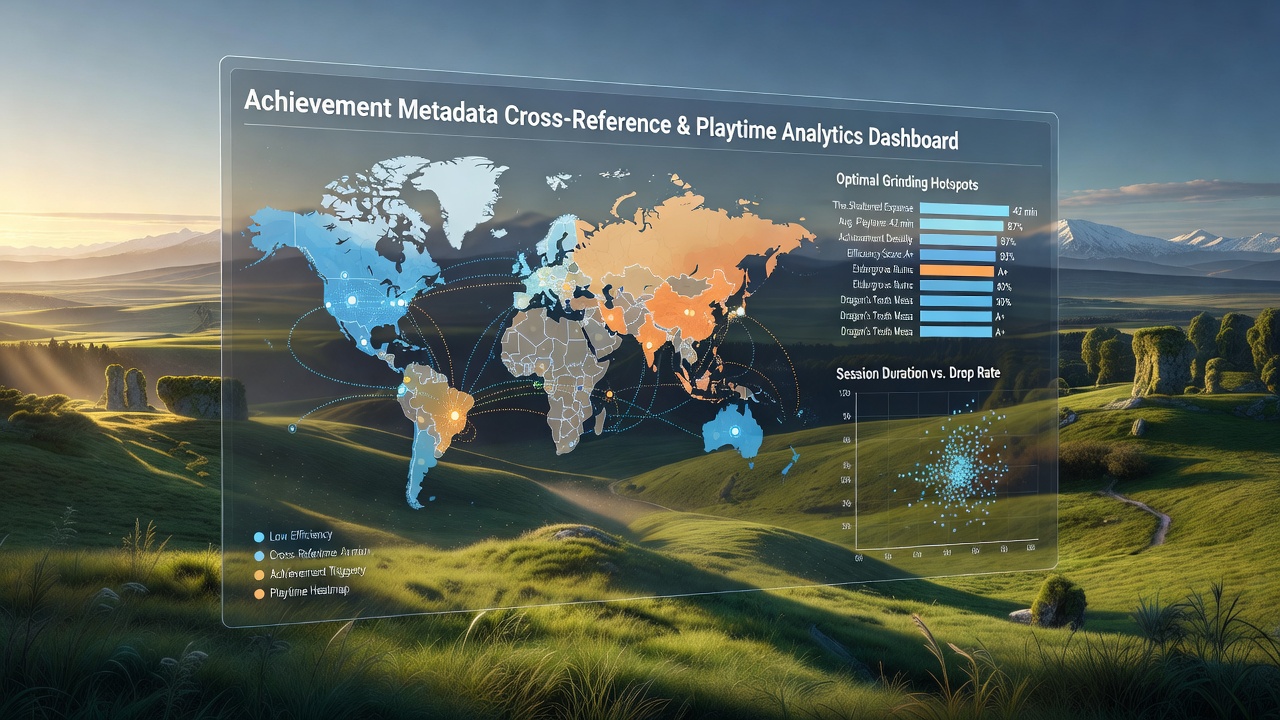
Cross-Referencing Achievement Metadata with Playtime Statistics for Identifying Optimal Grinding Locations in Expansive Fantasy Worlds
Game developers and analysts track player progress through achievement systems that record specific milestones such as monster kills, resource collections, and quest completions alongside precise playtime logs measured in minutes per zone or region. These datasets allow researchers to cross-reference completion frequencies against time investments, revealing which areas deliver the highest returns for repetitive activities commonly known as grinding. In expansive fantasy titles released or updated through 2025, this approach has grown more sophisticated as studios integrate telemetry tools that capture granular location data without requiring manual player input.
Data Collection Methods in Modern Fantasy Titles
Developers log achievement triggers at the moment players fulfill conditions like defeating a set number of enemies in designated biomes, while playtime statistics accumulate through server-side timers that segment sessions by coordinates or map sectors. Analysts then merge these streams into unified databases where queries identify correlations, for instance showing that a forest zone yields 45 achievement points per hour compared to 28 in mountainous terrain. Such calculations rely on standardized metadata formats that tag each event with timestamps, player levels, and environmental variables like enemy density or spawn rates.
Studies conducted by institutions including the University of Alberta have examined how these combined metrics function across multiple titles, noting patterns where early-game grinding hubs consistently outperform later areas when adjusted for player progression curves. The process involves filtering datasets to exclude outliers such as afk sessions or boosted accounts, ensuring the resulting efficiency rankings reflect typical player behavior rather than anomalies.
Application to Zone Efficiency Analysis
Once metadata merges occur, heatmaps emerge that highlight optimal grinding sites by plotting achievement density against cumulative hours spent. Players often discover through these visualizations that certain starting zones retain value long after story progression because respawn mechanics and loot tables align favorably with repeated farm cycles. In June 2026 several major fantasy MMOs plan to release updated telemetry APIs that expand location tagging to include vertical layers in multi-level dungeons, potentially refining these calculations further.
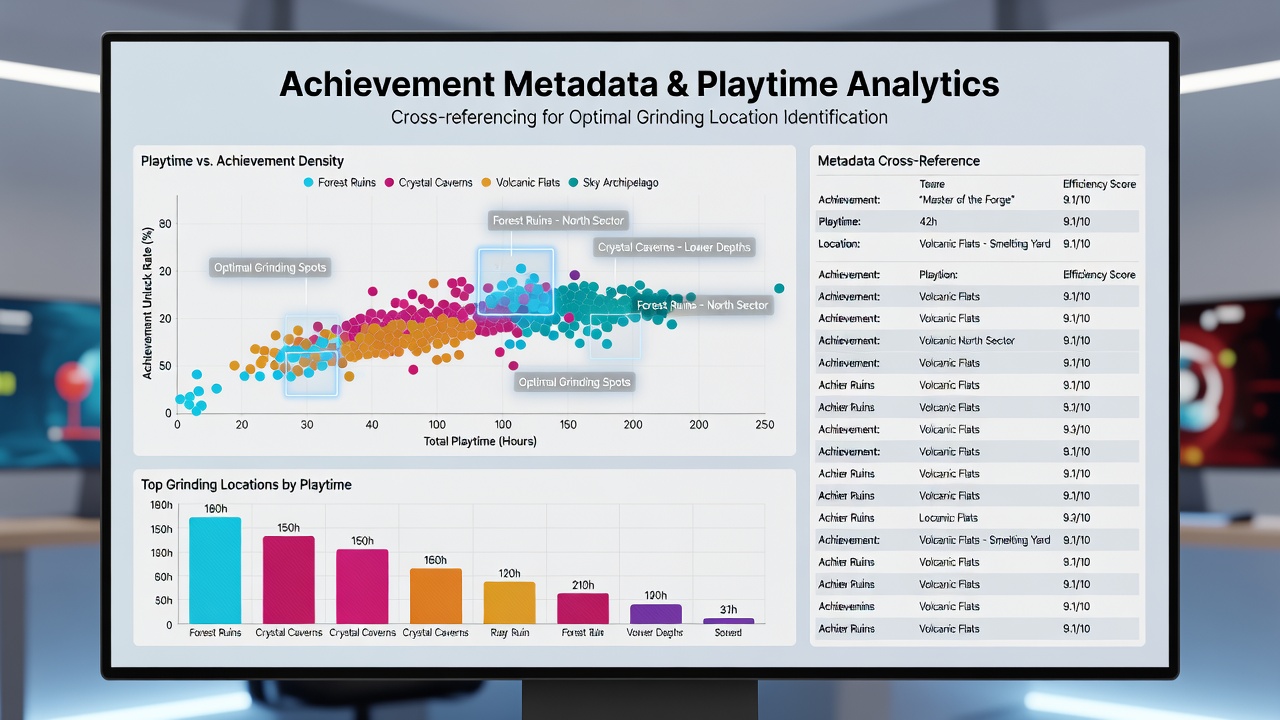
Cross-referencing also accounts for variables like server population and event overlaps, since temporary boosts during festivals can skew hourly rates upward in popular zones. Analysts adjust for these factors by normalizing data against baseline periods, producing stable recommendations that hold across different player populations. Reports from the Interactive Games and Entertainment Association in Australia indicate that studios applying these methods have observed measurable shifts in player retention when they surface optimized locations through in-game hints or companion apps.
Case Examples from Established Fantasy Franchises
Take one expansive title where achievement logs show high completion rates for herb-gathering milestones in a central valley region paired with average session times under 90 minutes, while adjacent swamp areas require over two hours for comparable progress. The merged statistics point to the valley as the superior grinding location because terrain accessibility and enemy patrol patterns minimize downtime between spawns. Observers note similar outcomes in other worlds where underwater or aerial zones appear efficient on paper yet deliver lower real-world returns once travel time and oxygen mechanics factor into the equations.
Another documented instance involves a desert expansion where daily quest achievements cluster around oasis hubs, yet playtime data reveals that players spend disproportionate time traveling between scattered nodes. Refining the analysis by segmenting data into travel versus active grinding segments shifts the optimal designation to a single fortified canyon that combines multiple achievement types within a compact footprint. These findings surface repeatedly when analysts apply consistent filtering rules across different game versions and patches.
Technical Considerations for Accurate Cross-Referencing
Accuracy depends on handling edge cases such as multi-account usage or seasonal event distortions that temporarily inflate certain metrics. Researchers apply statistical techniques including regression analysis to isolate the impact of location-specific factors from broader player skill or gear progression influences. Data pipelines often incorporate machine learning models trained on historical patches to predict how upcoming balance changes might alter efficiency rankings before they reach live servers.
European Games Developer Federation documentation highlights collaborative frameworks where multiple studios share anonymized datasets to establish industry benchmarks for grinding optimization tools. These shared resources help smaller teams implement similar cross-referencing systems without building full telemetry infrastructures from scratch, expanding access to location insights across a wider range of fantasy worlds.
Conclusion
Cross-referencing achievement metadata with playtime statistics produces location rankings grounded in measurable player activity rather than anecdotal reports. As telemetry capabilities advance through 2026 and beyond, these methods continue to supply objective guidance for identifying efficient grinding sites in expansive fantasy environments where time investments directly influence progression speed and resource accumulation. The resulting data supports both player decision-making and developer efforts to balance zone design across large-scale worlds.