Cataloging seasonal event overlaps with daily login streaks to predict bonus accumulation windows in gacha-based mobile titles
Written by Yves Berger · Jun 7, 2026
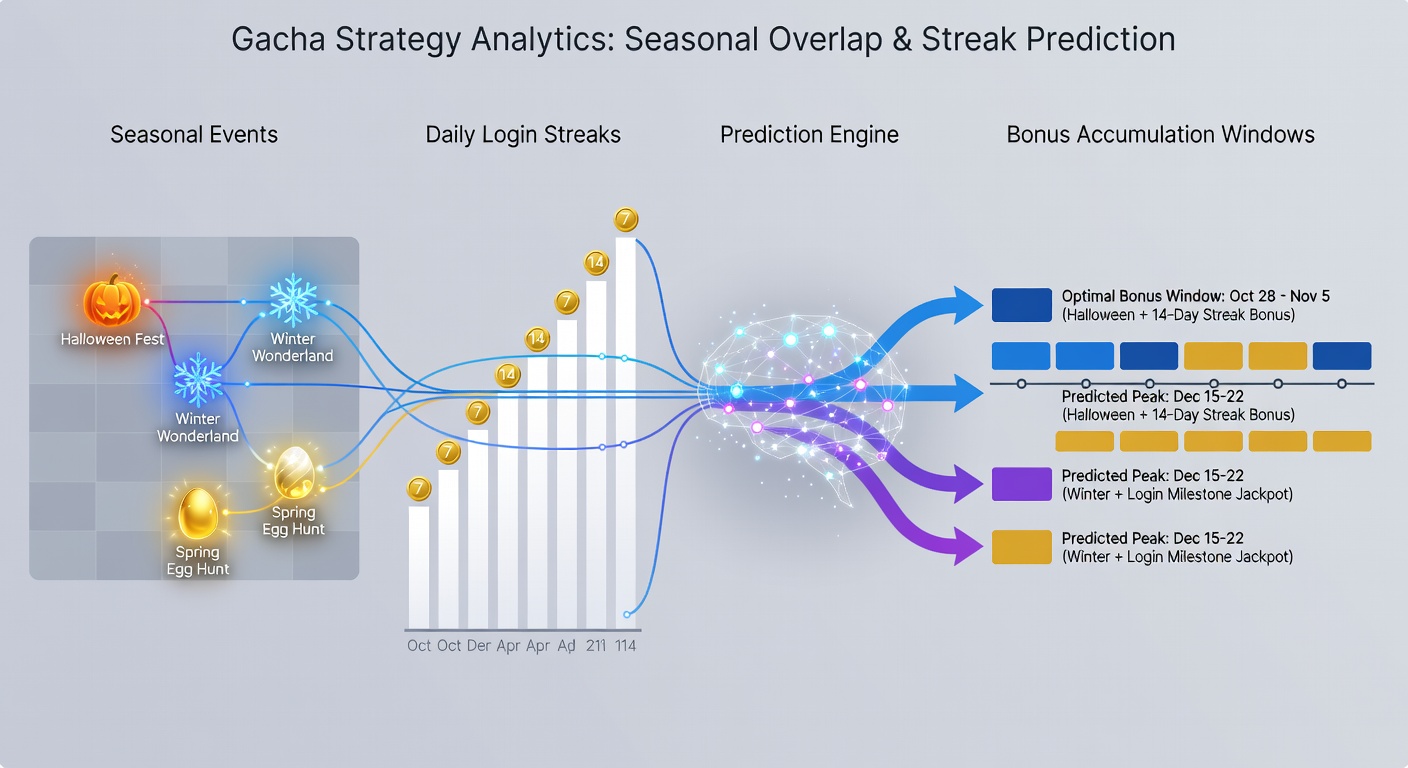
Cataloging seasonal event overlaps with daily login streaks to predict bonus accumulation windows in gacha-based mobile titles
Many gacha-based mobile titles structure player engagement around daily login streaks that grant incremental rewards, and these systems frequently intersect with seasonal events that introduce limited-time bonuses, banners, and currency multipliers. Researchers tracking player behavior across platforms note that systematic cataloging of these overlaps allows identification of accumulation windows where rewards compound more efficiently than during isolated periods.
Data collected from major releases shows login streaks typically reset or escalate at fixed intervals, such as every seven or thirty days, while seasonal events run on calendars tied to real-world holidays or anniversaries. When these timelines align, players encounter periods where login bonuses feed directly into event currencies or pity systems, creating measurable spikes in total value obtained per session.
Mechanics of Daily Login Rewards
Login systems award escalating items across consecutive days, with milestones often delivering premium currency, character fragments, or energy refills. Studies of player retention metrics indicate that these rewards scale non-linearly, so missing a single day can shift an entire streak into a lower tier and reduce cumulative output. Game servers log these patterns automatically, and aggregated datasets reveal consistent monthly cycles where day-seven and day-thirty bonuses coincide with higher-value drops.
Seasonal events layer additional tracks on top of standard logins. Event-specific login calendars frequently grant duplicate rewards or bonus multipliers that apply only while the event remains active. Analysts examining release schedules find that anniversary events, summer festivals, and holiday campaigns produce the longest overlap durations, sometimes spanning ten to fourteen days.
Mapping Event Calendars to Login Cycles
Developers publish roadmaps months in advance for many titles, listing banner start dates, event durations, and maintenance windows. Cross-referencing these announcements with login streak data produces a timeline of predicted accumulation windows. Observers note that titles running on synchronized global servers release these schedules in predictable quarterly blocks, allowing advance charting of periods where login day multiples align with event currency farming phases.
In June 2026 several major gacha releases are scheduled to begin anniversary campaigns that land near the middle of standard thirty-day login cycles. Historical patterns from prior years show that such alignments generate extended windows where daily premiums combine with limited banner pity counters, increasing the rate at which high-rarity units accumulate without additional purchases.
Quantifying Bonus Accumulation Windows
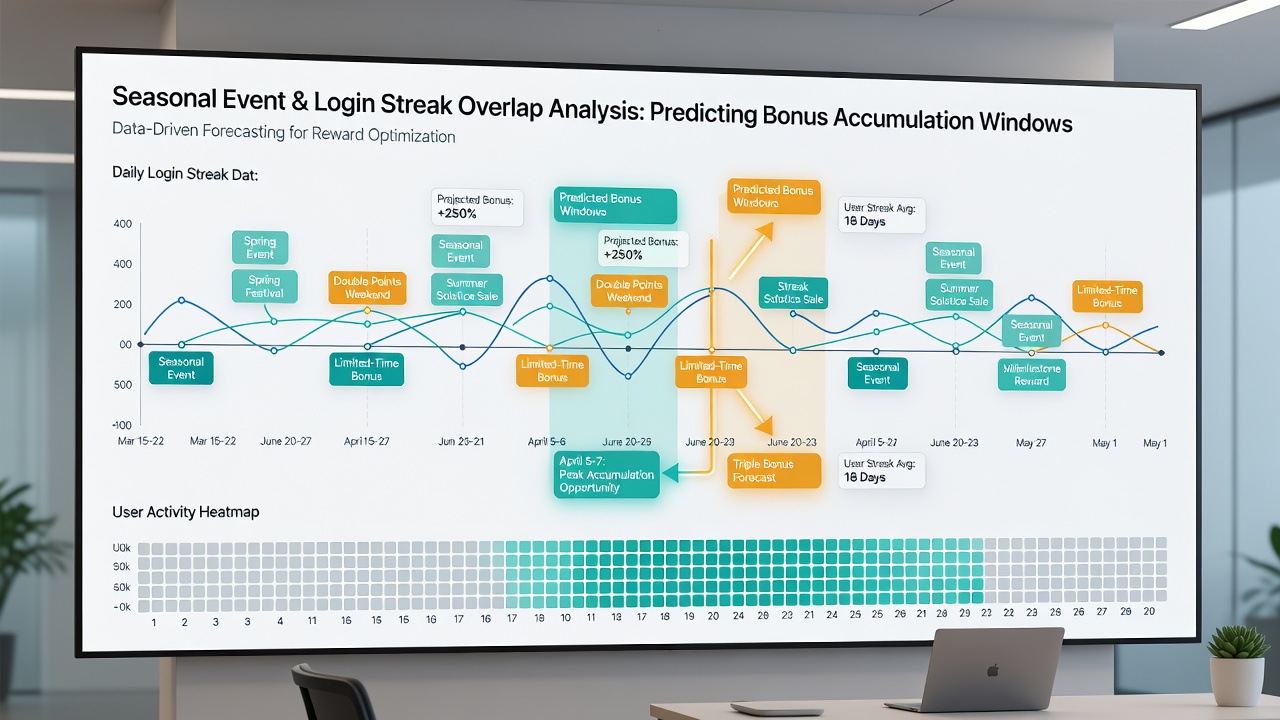
Quantification begins with logging the exact start and end timestamps of both login streaks and seasonal events, then calculating the number of days where both systems run concurrently. Metrics derived from public player forums and aggregated telemetry indicate that windows exceeding seven days yield compounding effects because login milestones reset inside the event period. Shorter overlaps produce isolated spikes that remain measurable but deliver less total value.
Statistical models built from multi-title datasets apply simple intersection calculations. When an event banner begins on login day twelve of a thirty-day cycle, the model flags the remaining eighteen days as a high-yield window. Adjustments for maintenance downtime and time-zone differences refine the predictions further, producing schedules accurate to within twenty-four hours according to reported player logs.
Practical Application Across Titles
Players maintain spreadsheets or automated scripts that import official event calendars and flag upcoming overlaps. One documented case involved a title whose winter holiday event overlapped with a login reset on day twenty-one, resulting in a documented surge in free premium currency tracked across thousands of accounts. Similar documentation exists for titles where mid-year festivals coincide with day-fourteen login rewards, creating two separate accumulation peaks within a single month.
Regional server differences affect timing. Titles with separate Asian, European, and North American deployments shift event start dates by several hours or days, so catalogs must account for each region independently. Data released by industry groups such as the Entertainment Software Association shows that regional scheduling variations influence peak engagement hours and reward collection efficiency.
Tools and Data Sources
Public APIs from some publishers expose event schedules in machine-readable formats, while community-maintained wikis compile historical login data. Academic researchers have published papers on player retention in free-to-play mobile games through university repositories, providing baseline statistics on how streak length correlates with session frequency. These sources allow independent verification of overlap predictions without relying on in-game telemetry alone.
Canadian gaming industry reports from the International Game Developers Association further detail how daily reward structures vary across markets, offering additional context for calendar construction. Combining these datasets produces calendars that update automatically when new roadmaps appear.
Conclusion
Cataloging seasonal event overlaps with daily login streaks supplies a repeatable method for locating bonus accumulation windows in gacha-based mobile titles. The approach relies on publicly available schedules, historical streak data, and straightforward intersection calculations that produce actionable timelines. As more titles adopt synchronized global releases, the precision of these predictions continues to increase, giving players structured ways to align their participation with periods of elevated reward output.