Analyzing Quest Order Statistics Uncovers Efficient Narrative Branch Paths in Choice-Driven Role-Playing Experiences
Written by Viktor Günther · Jul 7, 2026
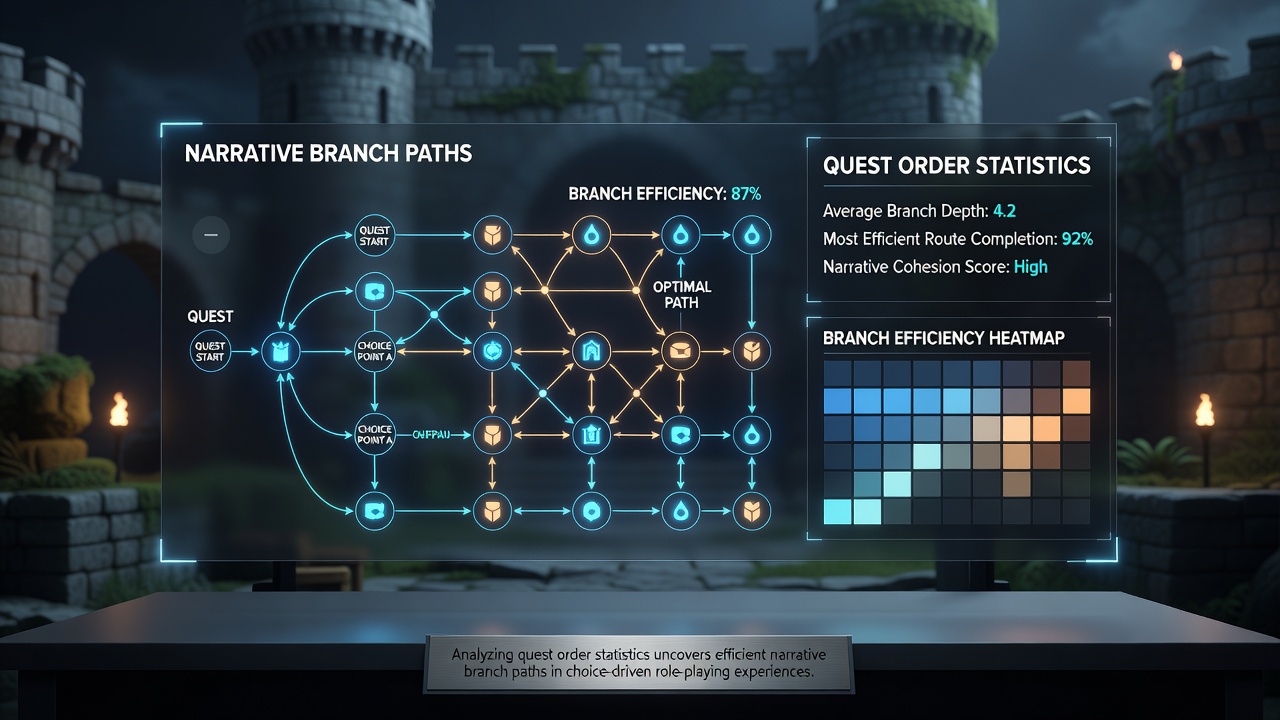
Analyzing Quest Order Statistics Uncovers Efficient Narrative Branch Paths in Choice-Driven Role-Playing Experiences
Players in choice-driven role-playing experiences generate extensive datasets through their decisions on quest sequences, and analysts examine these patterns to map out paths that lead to favorable narrative outcomes with reduced backtracking or missed opportunities. Quest order statistics track the sequence in which individuals complete tasks, dialogue options, and faction alignments, revealing correlations between early choices and later branch accessibility across multiple playthroughs.
Data Collection Approaches in Narrative RPG Analysis
Developers and independent researchers gather quest order data through in-game telemetry systems that log timestamps, player levels, and decision points without requiring manual input. These systems capture variables such as reputation thresholds crossed after specific quests or the availability of alternate routes that open only after certain combinations occur in sequence. Aggregated datasets from thousands of sessions allow statistical models to identify clusters where particular orders minimize total playtime while maximizing access to unique story arcs or companion interactions.
Studies from academic institutions have applied sequence mining algorithms to these logs, treating each quest chain as a string of events that branch based on prior selections. One approach involves Markov chain modeling to calculate transition probabilities between quests, showing how completing a side objective before a main story beat increases the likelihood of unlocking hidden dialogue trees by measurable percentages. In July 2026, updated industry reports highlighted expansions in these analytical tools, incorporating machine learning to predict branch efficiency across larger player bases.
Mapping Efficient Branch Paths Through Statistical Patterns
Statistical examination often starts with frequency distributions of quest completion orders, then layers in outcome variables like total experience gained or endings achieved. Analysts note that paths prioritizing certain introductory quests tend to cluster around higher rates of narrative convergence, where multiple branches merge into shared content rather than diverging into isolated segments. This clustering emerges because early alignment with one faction frequently gates or accelerates progress in related storylines, creating measurable shortcuts in overall campaign length.
Researchers apply association rule learning to detect combinations such as quest A followed by quest B yielding elevated probabilities of accessing a premium branch compared to the reverse order. Data from large-scale collections indicates these rules hold across genres that emphasize player agency, with efficiency gains appearing in metrics like reduced travel distance or fewer required reloads. Observers note that visualization techniques, including Sankey diagrams for flow representation, help illustrate how small shifts in sequence reorder the entire decision tree.

Integration with Player Behavior Metrics
Quest order statistics gain additional context when cross-referenced against broader behavior indicators such as session duration, inventory changes, and dialogue selection rates. Patterns surface where players who delay certain exploration quests encounter bottlenecks that force inefficient backtracking, whereas those who interleave them with story progression maintain steadier advancement curves. This integration supports predictive models that flag high-yield sequences for new participants entering the same title.
Industry organizations including the Entertainment Software Association have documented how such analyses inform post-launch updates, adjusting quest triggers to balance path efficiencies without altering core narrative intent. Geographic variations appear in datasets as well, with reports from European research groups showing regional differences in preferred orders tied to cultural playstyles, while North American collections emphasize speed-focused metrics.
Applications for Developers and Community Tools
Game studios incorporate these findings into design pipelines by simulating quest graphs during pre-release testing, using historical order data to refine dependency structures. Community modders extend this work through external trackers that export logs for custom analysis, generating guides that list statistically validated sequences for achieving specific endings or collectibles. Academic papers on procedural narrative systems reference these methods to explore how algorithmic adjustments to quest availability can guide players toward balanced experiences.
Further connections emerge when quest statistics combine with achievement metadata, revealing optimal routes for completionists who seek every branch without redundant effort. European Games Developer Federation publications have referenced aggregated findings from multiple titles, noting consistent efficiencies in paths that front-load relationship-building quests before major conflicts.
Conclusion
Quest order statistics provide a structured lens for understanding narrative efficiency in choice-driven role-playing experiences, turning raw player logs into actionable maps of branch accessibility and outcome optimization. As analytical methods advance with contributions from varied global sources, the insights continue to shape both individual strategies and broader design practices across the genre.